

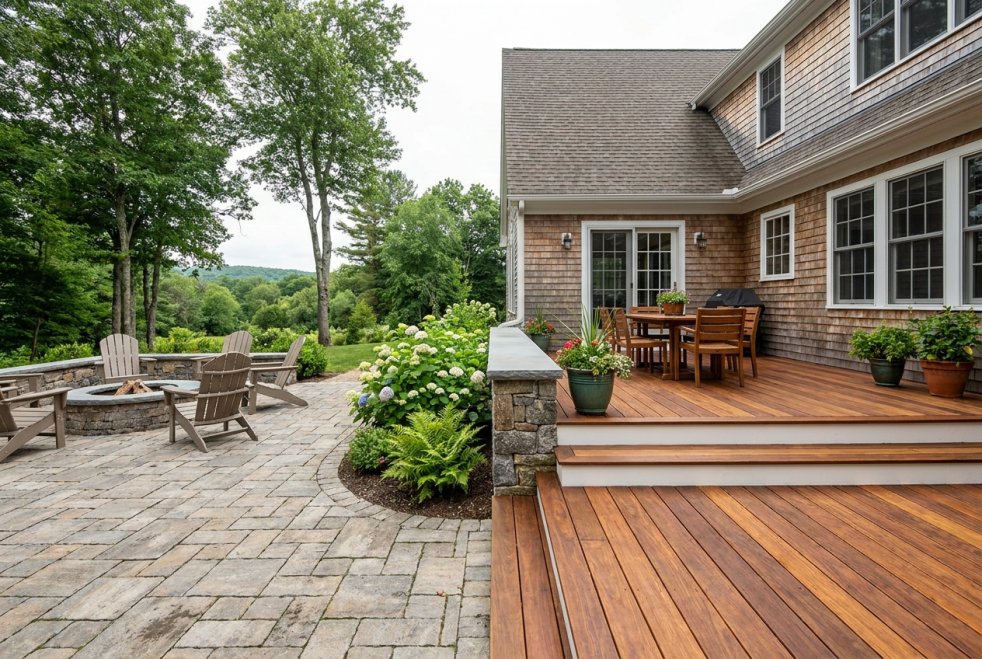
Paver Patios vs. Wood Decks: Which Is Right for Your New England Home?
Choosing between a paver patio and a wood deck is one of the most common decisions homeowners face when planning an outdoor living space. Both options look great and add value, but they perform very differently in the New England weather. Here is what you need to know before committing to either.
How New England's Climate Affects Your Choice
Massachusetts sees cold winters, heavy snow, and humid summers. These conditions are tough on outdoor materials. Both patios and decks can hold up well in this region, but only when the right materials and installation methods are used. Understanding the trade-offs will help you make a smart, long-term investment.
Paver Patios: Pros and Cons
Paver patios are built at ground level using concrete, natural stone, or brick pavers set over a compacted gravel base. They are a popular choice throughout southeastern Massachusetts for good reason.
Pros of paver patios:
- Extremely durable and long-lasting, often 25 to 50 years with proper installation
- Handles freeze-thaw cycles well when installed with proper base depth (typically 6 to 8 inches in New England)
- Low maintenance, no staining, sealing, or painting required every year
- Individual pavers can be replaced if one cracks or shifts
- No risk of rot, splinters, or insect damage
- Adds strong curb appeal and resale value
Cons of paver patios:
- Higher upfront cost compared to pressure-treated wood decks
- Pavers can shift or settle over time if the base is not properly prepared
- Weeds can grow between joints without polymeric sand or sealing
- Not ideal for sloped yards or elevated areas where a deck makes more structural sense
Wood Decks: Pros and Cons
Wood decks are a classic choice, and they remain popular in Swansea and surrounding towns. They work especially well for homes with elevated foundations, sloped lots, or back doors that sit above grade.
Pros of wood decks:
- Lower initial cost, especially with pressure-treated lumber
- Easier to build on uneven terrain or elevated areas
- Natural look and feel that many homeowners prefer
- Can be customized with built-in seating, railings, and pergolas
- Composite decking options offer better durability with a similar look
Cons of wood decks:
- Pressure-treated wood requires annual or biannual staining and sealing in New England
- Susceptible to moisture damage, rot, and mold in humid coastal climates like Swansea
- Wood can warp, crack, or splinter after repeated freeze-thaw exposure
- Composite decking costs significantly more upfront, though it reduces long-term maintenance
- Structural components like joists and posts still require regular inspection for rot
Which Option Holds Up Better in Massachusetts?
For flat or gently sloped yards, paver patios generally outperform wood decks over the long run in this region. The combination of humidity, wet springs, and harsh winters accelerates wood deterioration faster than many homeowners expect.
That said, wood and composite decks remain the right answer when elevation is a factor. If your back door sits four feet above grade, a deck is the practical and often the only sensible choice.
A few key questions to ask yourself:
- Is the area flat, or does your yard slope significantly?
- How much ongoing maintenance are you willing to do each year?
- Are you prioritizing upfront cost or long-term durability?
- Do you want a more natural wood feel, or a clean, hardscape look?
Warning Signs Your Current Outdoor Space Needs Attention
If you already have a deck or patio, keep an eye out for these red flags before they turn into bigger problems.
- Soft or spongy boards on a deck, which can signal rot in the framing below
- Wobbly railings or posts that have lost structural integrity
- Pavers that rock, sink, or have large gaps between them
- Standing water that does not drain properly after rain
- Visible mold, mildew, or discoloration on wood surfaces
Catching these issues early saves money and prevents safety hazards. A failing deck or poorly draining patio can also cause water to migrate toward your foundation over time.
Ready to Build or Upgrade Your Outdoor Space?
Whether you are leaning toward a low-maintenance paver patio or a custom wood deck, the most important factor is working with a contractor who understands New England construction and installs things the right way the first time. Marvel General Contracting has helped homeowners across Swansea and the South Coast region plan and build outdoor spaces built to handle everything this climate throws at them.
Call us today at (774) 500-3992 to schedule a free consultation and get expert advice on which option makes the most sense for your property.

