

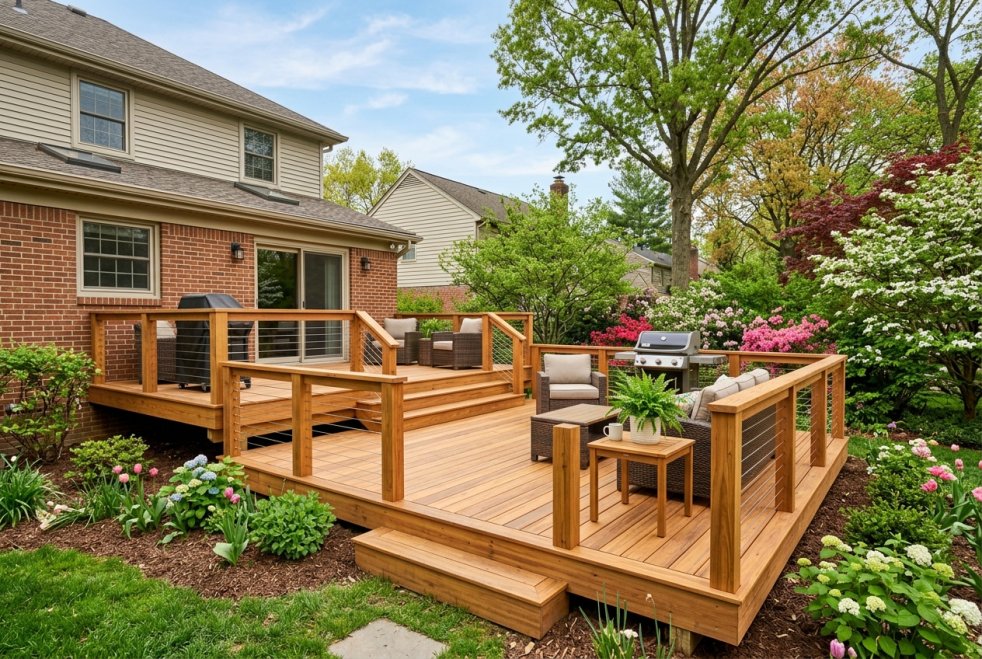
Spring Is Deck Season: What to Know Before You Build or Replace Yours
Spring arrives, the snow melts, and suddenly every homeowner in Swansea is thinking about their backyard. If your deck has seen better days, or if you have been putting off building one altogether, this is the season to move. The weather cooperates, contractors are scheduling, and you still have time to enjoy the finished product all summer long.
Why Spring Is the Right Time to Start
Southeastern Massachusetts winters are tough on outdoor structures. Freeze-thaw cycles, ice, snow load, and moisture work together to accelerate wear on any deck. By the time April arrives, the damage from the past season is fully visible and the ground has stabilized enough for foundation and footing work to begin properly.
Starting your project in spring also means:
- Your deck is ready before summer entertaining season begins
- Contractor schedules are more flexible than they will be in June or July
- Cooler temps are easier on crews and on materials during installation
- You avoid the fall rush when everyone scrambles before the cold returns
Waiting until July often means waiting until September. Book early and you will actually use your deck this year.
Warning Signs Your Existing Deck Needs to Go
Not every deck needs a full replacement, but some do. Patching a structurally compromised deck is a short-term fix that can become a safety issue fast.
Look for these warning signs:
- Soft, spongy, or visibly rotted boards, especially near the ledger and posts
- Wobbly or leaning posts and railings that fail the shake test
- Rusted or missing hardware at the ledger board connection to the house
- Boards that are cupped, cracked, or splitting along the grain
- Joists or beams showing signs of rot when you probe them with a screwdriver
If the framing is compromised, a new deck surface on top of it is not a solution. A proper rebuild from the footings up is the right call.
Composite vs. Wood Decking in Massachusetts
This is one of the most common questions homeowners ask, and the answer depends on your priorities. Both materials work well in our climate, but they perform and age very differently here in southeastern MA.
Pressure-treated wood is the traditional choice. It costs less upfront, is easy to work with, and is widely available. The trade-offs are real though. Wood requires regular sealing or staining, it is prone to warping and checking in our humid summers and cold winters, and it needs consistent maintenance to stay safe and looking good.
Composite decking (brands like Trex, TimberTech, and Azek) costs more to install but delivers significant advantages in this region:
- Resistant to moisture, rot, and mold, which matter a lot in coastal and humid MA conditions
- No annual staining or sealing required
- Holds up better through freeze-thaw cycles without warping or cracking
- Splinter-free surface, which is a real plus for families with kids
- Most products carry 25-year or longer warranties
For homeowners who want a low-maintenance deck that holds its appearance through New England weather, composite is often the smarter long-term investment. For those with tighter upfront budgets who do not mind annual upkeep, quality pressure-treated lumber is still a solid option when properly installed.
Permits: What You Need to Know in Swansea, MA
Skipping the permit process is a mistake that can cost you far more than the permit itself. In Swansea, a building permit is required for new deck construction and for most replacement projects that involve structural changes.
Here is why this matters:
- Un-permitted decks can create problems when you sell your home
- Homeowner's insurance may not cover incidents on an un-permitted structure
- Inspections protect you by confirming footings, framing, and railings meet current code
- MA building code has specific requirements for railing height, baluster spacing, and load capacity
A licensed contractor will handle the permit application as part of the project. If someone offers to skip it to save time or money, that is a red flag worth taking seriously.
What a Quality Deck Build Actually Includes
A deck is only as good as what you cannot see. The surface boards get all the attention, but the framing, footings, and connections are what determine how long it lasts and how safe it is.
A properly built deck in our region should include:
- Concrete footings poured below the frost line (42 inches in Massachusetts)
- Properly sized and spaced joists and beams for the intended load
- A correctly flashed and bolted ledger connection to the house
- Stainless steel or hot-dipped galvanized hardware throughout
- Railings and stairs built to current MA residential code
Cutting corners on any of these elements creates a deck that looks fine for a season or two and then becomes a liability.
Ready to Get Started This Spring?
Spring fills up fast in this area. If you are serious about having a new or rebuilt deck ready for summer, the time to start the conversation is now, not after Memorial Day.
Marvel General Contracting builds and replaces decks throughout Swansea and the surrounding area. We handle permits, help you choose the right materials for your budget and goals, and build structures designed to handle everything a Massachusetts winter can throw at them.
Call us today at (774) 500-3992 to schedule your free estimate. We will walk your property, assess what you have, and give you a clear picture of your options before you commit to anything.

